Publications #
- From Competition to Coexistence: The Evolution of the Labor Market for College Graduates in the Age of Automation
Routledge, forthcoming Sep 2025.
Authors: Peikang Zhang, Huailiang Liang, Yuxuan Qin, Xuanyu Chen
Economics of EducationGrounded in “The Race Between Education and Technology”, this book analyzes multisource data to explore the shift from competition to coexistence between humans and automation. We demonstrate how automation reshapes skill demands, career paths, education policies, and labor market structures in China and globally, offering fresh insights into the economics of education and labor economics.
Working Papers #
-
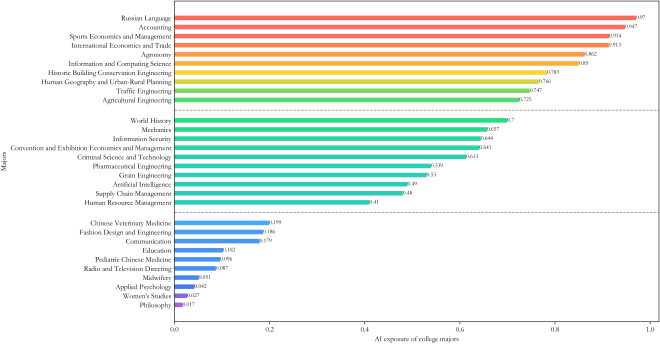
Generative AI and Human Capital Investment: Evidence from College Major Choice in China (with Peikang Zhang)
Economics of EducationUsing unique administrative data on Chinese college admissions (2020–2024) and a difference-in-differences (DID) approach, we provide the first evidence that generative AI significantly reduces admission scores for AI-exposed majors, especially among students from non-poverty counties, highlighting shifts in human capital investments and labor market implications.
-
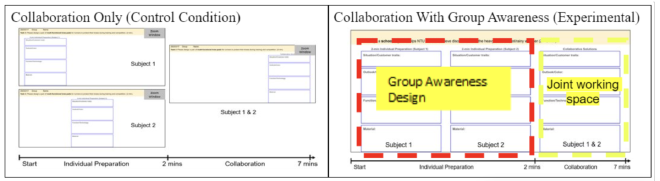
Students’ Verbal Interaction Patterns in Collaborative Learning: The Role of Group Awareness (with Wenli Chen, Lishan Zheng)
Computer-Supported Collaborative Learning (CSCL)Using lag sequential analysis (LSA) and sequential pattern mining (SPM), we provide evidence that group awareness tools foster structured transitions and richer sequential patterns, enhancing task coordination and reducing negotiation cycles.
-
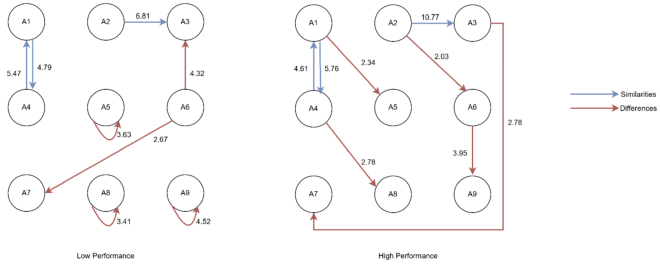
Exploring Collaborative Behavior Differences Between High and Low Performing Groups with Group Awareness Support: Using Gaze and Interaction Behavior (with Wenli Chen, Lishan Zheng)
Computer-Supported Collaborative Learning (CSCL)Using multimodal analysis combining verbal interaction and eye-tracking data, this study finds that high-performing groups, supported by group awareness tools, exhibit longer fixation durations on individual/partner contributions, efficient verbal patterns (e.g., idea offering → negotiation), and productive inquiry cycles, compared with low-performing groups.
-
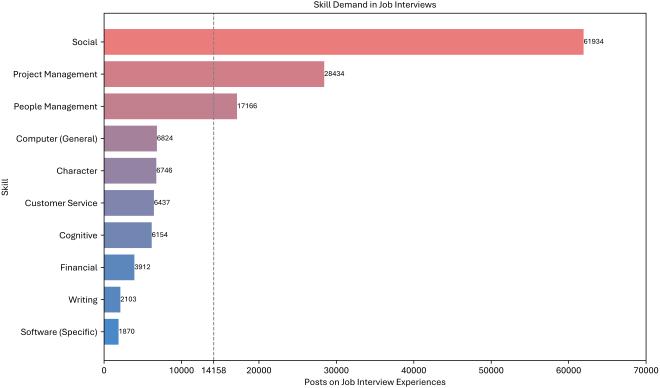
The Impact of Automation on the Demand for Specific Skills: Evidence Based on Real Interview Experience (with Peikang Zhang)
Economics of EducationThis study analyses job-search behaviour using interview-experience posts from kanzhun.com to examine how automation shapes skill demand. We compile over 210,000 posts covering 3,729 large employers (2009–2023). Firms with higher automation intensity place greater emphasis on analytical skills and tend to conduct more demanding written tests and more socially oriented interview. These requirements feature tasks less amenable to automation, therefore exhibiting lower pass rates and higher perceived difficulty reported by interviewees.